Allergies Diagnosis and
Treatment l Allergies
- The What and the Why
Allergies
- The What and the Why l Testing l Injections
Allergies
If
you are allergic, you are reacting
to a particular substance.
Any substance that can trigger
an allergic reaction is called
an allergen. To determine which
specific substances are triggering
your allergies, our Ear, Nose
and Throat, Ltd. doctor will
direct the Allergy Clinic staff
to safely and effectively test
your skin, or sometimes your
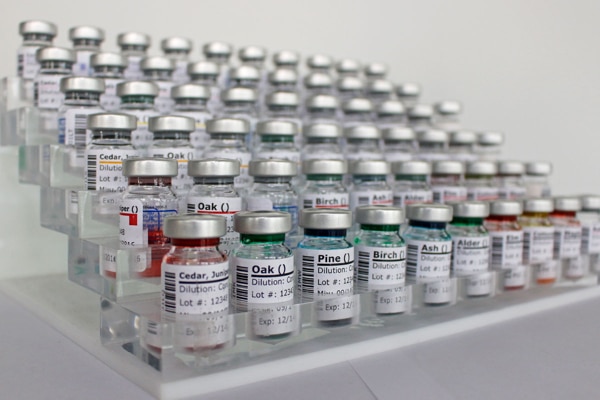
blood, using tiny amounts of
commonly troublesome allergens.
Allergy tests are designed
to gather the most specific
information possible so we
can determine what you are
allergic to and provide the
best treatment.
Allergy tests provide concrete
specific information about
what you are and are not allergic
to. Once you have identified
the specific allergen(s) causing
your symptoms, you and our
physician/allergy team can
develop a treatment plan aimed
at controlling or eliminating
your allergy symptoms. With
your allergy symptoms under
control you should see a considerable
improvement in the quality
of your life. Improved sleep
quality because of less congestion,
days without constant sneezing
and blowing your nose, life
without frequent sinus infections,
improved ability to exercise,
and better control of your
atopic dermatitis (eczema)
are some of improvements you
may gain from your allergy
treatment plans. In most cases,
sinus infections are brought
on by allergies.
There are two common methods
of performing the allergen
testing:
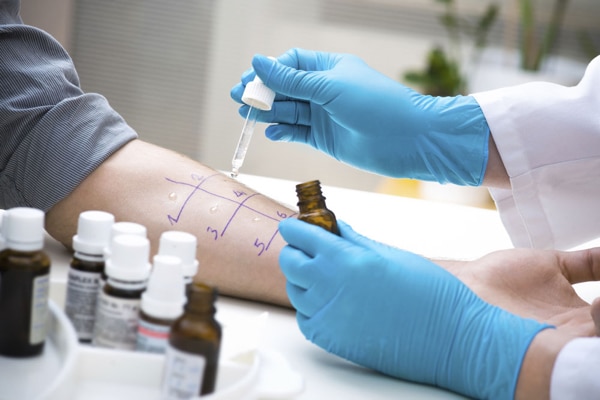
1. Prick Technique: The prick
technique involves introducing
a small amount of allergen
into the skin by making a small
puncture through which a drop
of the allergen extract is
introduced. If you have an
allergy, the specific allergens
that you are allergic to will
cause a chain reaction to begin
in your body.
2. Intradermal: Involves injecting
a small amount of allergen
under the skin with a syringe.
This form of testing is more
sensitive than the prick skin
test method. This form of allergy
testing may be used if the
prick is inconclusive or suggest
further testing would provide
a more detailed evaluation.
People with allergies have
an allergic antibody called
IgE (immunoglobulin E) in their
body. This chemical, which
is only found in people with
allergies, activates special
cells called mast cells. These
mast cells release chemicals
called mediators, such as histamine,
the chemical that causes redness
and swelling. With testing,
this swelling occurs only in
the spots where the tiny amount
of allergen to which you are
allergic has been introduced.
So, if you are allergic to
ragweed pollen but not to cats,
the spot where the ragweed
allergen touched your skin
will swell and itch a bit,
forming a small pea-sized hive.
The spot where the cat allergen
scratched your skin will remain
normal. This reaction happens
quickly within your body.
Related
allergy links: Hayfever l
Allergic
Rhinitis
|