A bone anchored hearing device is a hearing device that relies on direct bone conduction to transmit sound. This surgically implanted device bypasses the auditory canal and middle ear, utilizing bones as a pathway for sound to reach the middle ear. It’s an alternative for people with chronic ear infections, congenital external auditory canal atresia and single-sided deafness. These patients usually do not benefit from conventional hearing aids.
How Do Bone Anchored Hearing Devices Work?
In a person with normal hearing, sound enters the external ear and travels down the ear canal through the middle ear to the cochlea, or inner ear. This process is called air conduction.
For individuals with certain types of hearing loss, sound is unable to travel down these pathways. Bone anchored devices take advantage of the bones’ natural conductive abilities by sending sound vibrations directly to your inner ear, bypassing the auditory canal and middle ear completely.
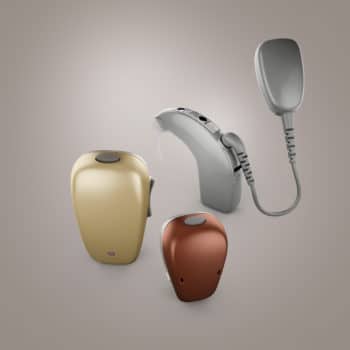
The bone anchored device is made up of three components: a titanium implant, an external abutment and a sound processor. Once the surgical implant is in place, it gradually fuses with the skull bone over a period of several months in a process known as osseointegration.
The device is then ready to be fit and programmed. The sound processor transmits vibrations through the external abutment to the implant, where vibrations in the skull and inner ear stimulate the nerve fibers responsible for hearing.
A bone anchored hearing device is a safe and effective FDA-approved treatment alternative that enables many hearing-impaired individuals to communicate more effectively. It has been available in the U.S. since 1977.
Who Can Benefit from Bone Anchored Hearing Devices?
Candidates for these devices are typically patients with conductive and mixed hearing losses, or those with unilateral (single-sided) hearing loss.
If you experience chronic ear infections that do not respond to treatment, you may find the system particularly beneficial. Conventional hearing aids can aggravate the condition due to humidity and moisture building up in the ear canals. Those with congenital ear defects (such as ear canals that are narrow or absent) are good candidates, as well.
Call Ear, Nose and Throat, LTD at (757) 623-0526 for more information or to schedule an appointment.
